

Sphinx riddles are mysterious puzzles that challenge your intelligence, test your logic, and invite you into the fascinating world of ancient mythology. From the legendary question asked by the Greek Sphinx to clever brain teasers you can share with friends, these riddles combine history, curiosity, and fun in one exciting experience.
Whether you enjoy difficult riddles, Greek mythology, Egyptian mysteries, or tricky questions with surprising answers, this collection offers something for every puzzle lover. Get ready to think carefully, trust your reasoning, and see whether you can solve the mysteries before revealing the answers!
🧩 What Are Sphinx Riddles?
Sphinx riddles are puzzles associated with the Sphinx, a mythical creature famous for guarding secrets and challenging people with difficult questions. In Greek mythology, the Sphinx of Thebes became especially famous for presenting a riddle that only Oedipus could solve.
The best-known Sphinx riddle asks which creature walks on four legs in the morning, two legs at noon, and three legs in the evening. Its answer is a human being, representing the stages of life: crawling as a baby, walking upright as an adult, and using a cane in old age.
Unlike ordinary guessing games, these puzzles often use symbolism, double meanings, and unexpected connections. They encourage readers to look beyond the obvious and discover the hidden logic behind a question.
🌟 The Famous Sphinx Riddle and Its Answer
The legendary riddle of the Sphinx remains one of the most recognizable puzzles in mythology.
The riddle:
What walks on four legs in the morning, two legs at noon, and three legs in the evening?
Answer: A human being. 👣
Explanation: The morning represents infancy, when a baby crawls on hands and knees. Noon represents adulthood, when a person walks on two legs. Evening represents old age, when a person may use a walking stick as a third support.
This riddle is powerful because it describes an entire human lifetime through a simple metaphor. It also demonstrates why the Sphinx became a symbol of mystery, intelligence, and challenging questions.
🏛️ Greek Mythology Sphinx Riddles
Greek mythology connects the Sphinx with a mysterious creature that challenged travelers near the city of Thebes. These mythology-inspired riddles explore wisdom, life, fate, and the power of logical thinking.
1. The Three Stages of Life
What begins on four legs, continues on two, and ends on three?
Answer: A human being. 👣
2. The Guardian of Secrets
I stand between knowledge and danger. Solve my question, and your path becomes clear. What am I?
Answer: The Sphinx. 🦁
3. The Power of Wisdom
What can defeat a powerful monster without using a sword?
Answer: Intelligence. 🧠
4. The Silent Challenge
I ask no question with my hands, yet my words can determine your fate. What am I?
Answer: A riddle. 🧩
5. The Hero’s Victory
What did Oedipus use to overcome the challenge of the Sphinx?
Answer: His reasoning and understanding of human life. 🏆
6. The Mystery of Thebes
What ancient city is associated with the famous Greek Sphinx riddle?
Answer: Thebes. 🏛️
7. The Creature of Mystery
I have the body of a lion and a humanlike face in many Greek depictions. What am I?
Answer: A Sphinx. 🦁
8. The Unseen Weapon
What can break a mystery without breaking anything physical?
Answer: Knowledge. 💡
9. The Price of Ignorance
What may remain a barrier until someone understands the answer?
Answer: An unsolved riddle. 🔐
10. The Test of the Mind
What becomes easier when you slow down, observe the details, and think logically?
Answer: Solving a puzzle. 🧠
🧠 Hard Sphinx Riddles With Answers
Ready for a bigger challenge? These difficult Sphinx-inspired riddles use wordplay, abstract thinking, and logical clues. Try to solve each puzzle before reading its answer.
11. The More You Take
The more you take from me, the more you leave behind. What am I?
Answer: Footsteps. 👣
12. The Invisible Prison
I can trap your thoughts without walls, locks, or chains. What am I?
Answer: Fear. 🌑
13. The Endless Journey
I move forward every second, never return, and cannot be stopped. What am I?
Answer: Time. ⏳
14. The Silent Teacher
I teach lessons without speaking, but people often understand me too late. What am I?
Answer: Experience. 📚
15. The Mystery of Words
What belongs to you but is used more often by other people?
Answer: Your name. 💬
16. The Vanishing Secret
The moment you reveal me, I stop being what I was. What am I?
Answer: A secret. 🤫
17. The Invisible Traveler
I can cross oceans without moving, enter a room without opening a door, and travel through minds. What am I?
Answer: A thought. 💭
18. The Unbreakable Chain
What connects people who have never met and can survive across generations?
Answer: A shared story. 📖
19. The Growing Mystery
What grows larger when you remove something from it?
Answer: A hole. 🕳️
20. The Unseen Reflection
I can show you something real without being a physical object. What am I?
Answer: A memory. 🪞
21. The Silent Witness
I record moments without speaking and can reveal what happened long after it is over. What am I?
Answer: A photograph. 📸
22. The Locked Mind
What key opens a door that has no lock?
Answer: Understanding. 🔑
23. The Disappearing Moment
What exists only briefly but can influence your entire future?
Answer: An opportunity. ✨
24. The Endless Question
What question can lead to another question without necessarily reaching a final answer?
Answer: Why? ❓
25. The Hidden Treasure
What becomes more valuable when shared but cannot be weighed on a scale?
Answer: Wisdom. 💎
😂 Funny Sphinx Riddles for Friends
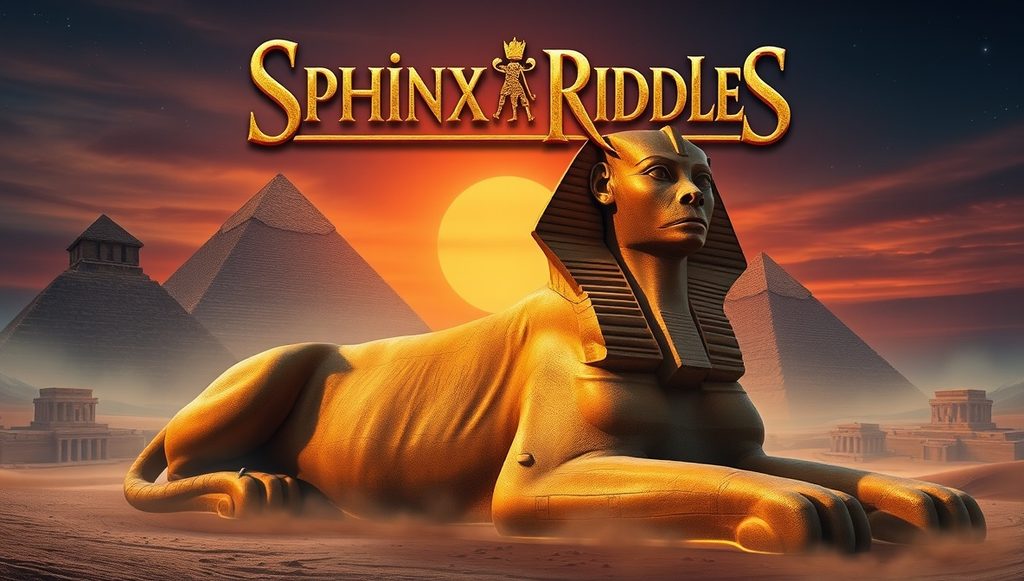
Not every Sphinx-inspired puzzle needs to feel ancient or serious. These playful riddles add humor to your conversations, parties, classroom activities, and social media posts.
26. The Hungry Mystery
What has teeth but never eats its dinner?
Answer: A comb. 😄
27. The Sleepy Traveler
What has a bed but never sleeps?
Answer: A river. 🏞️
28. The Talking Mystery
What speaks every language but has no mouth of its own?
Answer: A translator app. 📱
29. The Bald Challenge
What has a head and a tail but no body?
Answer: A coin. 🪙
30. The Wet Surprise
What gets wetter while drying something else?
Answer: A towel. 🧼
31. The Musical Puzzle
What has many keys but cannot unlock a door?
Answer: A piano. 🎹
32. The Hungry Clock
What keeps eating seconds but never feels full?
Answer: A clock. ⏰
33. The Flying Mystery
What can fly without wings and disappear without leaving a footprint?
Answer: Time. ⌛
34. The Noisy Secret
What becomes louder when you hit it but never complains?
Answer: A drum. 🥁
35. The Paper Puzzle
What has pages but cannot walk, and a spine but no bones?
Answer: A book. 📚
36. The Cold Character
What has a face and hands but cannot smile or wave?
Answer: A clock. 🕰️
37. The Endless Eater
What consumes wood and paper but has no mouth?
Answer: Fire. 🔥
38. The Invisible Visitor
What enters your nose without knocking and can make you sneeze?
Answer: Dust. 🤧
39. The Doorless House
What has rooms but no doors, and stores information instead of furniture?
Answer: A computer’s memory. 💻
40. The Fastest Runner
What runs around your yard without moving its feet?
Answer: A fence. 🏡
🔐 Tricky Sphinx Riddles That Fool Your Brain
These puzzles are designed to make you reconsider your first answer. Read the exact wording carefully because the solution often depends on a small but important detail.
41. The Missing Piece
What can you hold without using your hands?
Answer: Your breath. 🌬️
42. The Impossible Race
You pass the person in second place during a race. What position are you in now?
Answer: Second place. 🏃
43. The Family Mystery
Two fathers and two sons go fishing. They catch three fish, and each person gets one fish. How is that possible?
Answer: There are three people: a grandfather, his son, and his grandson. 🎣
44. The Dark Room
You enter a dark room with a candle, a lamp, and a fireplace. You have one match. What do you light first?
Answer: The match. 🔥
45. The Calendar Puzzle
How many months have at least 28 days?
Answer: All 12 months. 📅
46. The Broken Promise
What can be broken without being touched?
Answer: A promise. 💔
47. The Empty Basket
You put five apples in a basket and take away two. How many apples do you have?
Answer: Two, because those are the apples you took. 🍎
48. The One-Way Road
What goes up but never comes down?
Answer: Your age. 🎂
49. The Quiet Room
What can fill an entire room but takes up no physical space?
Answer: Light. 💡
50. The Word Puzzle
What five-letter word becomes shorter when you add two letters to it?
Answer: Short. Adding “er” makes “shorter.” ✍️
51. The Family Count
A mother has four daughters, and every daughter has one brother. How many children does the mother have?
Answer: Five children: four daughters and one shared brother. 👨👩👧👦
52. The Broken Clock
A clock shows the correct time twice every day despite being stopped. How is that possible?
Answer: A stopped 12-hour clock matches the correct time twice a day. 🕰️
53. The Weightless Object
What weighs nothing but can sink a person’s spirits?
Answer: Bad news. 🌧️
54. The Endless Echo
What repeats your words but never understands their meaning?
Answer: An echo. 🗣️
55. The Hidden Number
I am an odd number. Remove one letter, and I become even. What number am I?
Answer: Seven. Remove the letter “s” to make “even.” 7️⃣
🏺 Ancient Egyptian Sphinx Riddles
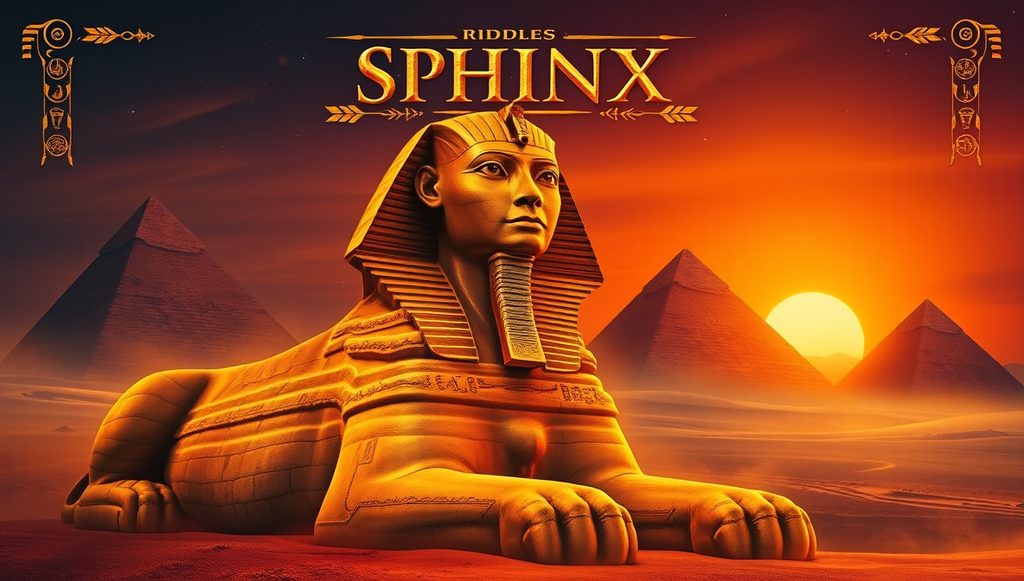
The Great Sphinx of Giza is one of Egypt’s most famous ancient monuments. It has the body of a lion and a human head and stands near the pyramids on the Giza Plateau.
Unlike the Greek Sphinx, which is closely associated with a famous riddle, the Egyptian Sphinx is primarily known as a monumental guardian figure. The following puzzles are modern, Sphinx-inspired riddles about Egyptian history, monuments, and ancient mysteries.
56. The Desert Guardian
I rest beside great pyramids and watch over the desert. My body belongs to a lion, and my face is human. What am I?
Answer: The Great Sphinx of Giza. 🏜️
57. The Ancient River
I flow through Egypt and helped sustain one of the world’s oldest civilizations. What am I?
Answer: The Nile River. 🌊
58. The Royal Tomb
I rise above the desert in a geometric shape and was built as a monumental tomb for a pharaoh. What am I?
Answer: A pyramid. 🔺
59. The Picture Language
I use symbols and pictures to represent words and sounds in ancient Egyptian writing. What am I?
Answer: Egyptian hieroglyphs. 📜
60. The Eternal King
What title was traditionally used for the rulers of ancient Egypt?
Answer: Pharaoh. 👑
61. The Desert Book
What ancient material, made from a plant, was used for writing and recordkeeping in Egypt?
Answer: Papyrus. 🌿
62. The Preserved Body
What process helped preserve the bodies of certain ancient Egyptians for the afterlife?
Answer: Mummification. ⚱️
63. The Stone Message
I carry carved symbols from the ancient world and help historians understand the past. What am I?
Answer: An inscribed stone. 🪨
64. The Golden Burial
What precious metal is strongly associated with royal treasures discovered in ancient Egyptian tombs?
Answer: Gold. ✨
65. The Timeless Monument
I have stood for thousands of years and remain a symbol of ancient Egyptian civilization. What am I?
Answer: The Great Sphinx of Giza. 🦁
💡 Clever Sphinx Riddles for Adults
These thought-provoking puzzles are suitable for adults who enjoy abstract thinking, philosophical questions, and wordplay. They are inspired by the mysterious atmosphere of the Sphinx rather than taken from ancient historical sources.
66. The Cost of Knowledge
What can make you wiser while also showing you how much you still do not know?
Answer: Learning. 📚
67. The Invisible Burden
What can become heavier when you refuse to share it?
Answer: A worry. 💭
68. The Silent Judge
What evaluates your decisions long after other people have forgotten them?
Answer: Your conscience. ⚖️
69. The Unseen Foundation
What supports a strong relationship but cannot be seen or touched?
Answer: Trust. 🤝
70. The Hidden Strength
What can help someone stand tall even when life knocks them down?
Answer: Resilience. 💪
71. The Endless Mirror
What reveals your habits through the results they produce?
Answer: Your actions. 🪞
72. The Precious Resource
Everyone receives it, nobody can save it for later, and it disappears whether you use it wisely or not. What is it?
Answer: Time. ⏳
73. The Invisible Bridge
What connects two people even when they disagree about almost everything?
Answer: Mutual understanding. 🌉
74. The Difficult Victory
What must you sometimes admit before you can truly learn from a mistake?
Answer: That you were wrong. 🧠
75. The Quiet Power
What can change a person’s direction without physically moving them?
Answer: An idea. 💡
76. The Hidden Beginning
What often appears to be a failure but can become the beginning of improvement?
Answer: A lesson learned from a mistake. 🌱
77. The Real Wealth
What can make a person feel rich without increasing their bank balance?
Answer: Gratitude. 💛
78. The Difficult Gift
What can be uncomfortable to hear but valuable to receive?
Answer: Honest feedback. 🎁
79. The Invisible Reward
What grows when you help others without expecting anything in return?
Answer: Generosity and goodwill. 💖
80. The Ultimate Question
What becomes clearer when you understand both what you know and what you do not know?
Answer: The limits of your knowledge. 🌌
🌿 Easy Sphinx Riddles for Kids
Sphinx riddles can be entertaining learning activities for children. These simpler puzzles help kids practice observation, vocabulary, and logical thinking while learning about the legendary creature.
81. The Yellow Visitor
I rise in the morning and bring light to the world. What am I?
Answer: The sun. ☀️
82. The Nighttime Light
I shine in the night sky, but I am not a star. What am I?
Answer: The moon. 🌙
83. The Tiny Traveler
I have wings, colorful patterns, and love flowers. What am I?
Answer: A butterfly. 🦋
84. The Rainy Surprise
I appear in colorful bands when sunlight meets water droplets. What am I?
Answer: A rainbow. 🌈
85. The Green Giant
I have roots, branches, and leaves, and I provide shade on sunny days. What am I?
Answer: A tree. 🌳
86. The Cold Treat
I am frozen, sweet, and often served in a cone. What am I?
Answer: Ice cream. 🍦
87. The Feathered Singer
I have feathers, a beak, and can sing beautiful songs. What am I?
Answer: A bird. 🐦
88. The Ocean Traveler
I live underwater, have fins, and breathe through gills. What am I?
Answer: A fish. 🐟
89. The Morning Friend
I ring to wake you up and help you start your day. What am I?
Answer: An alarm clock. ⏰
90. The School Companion
I contain pages, help you learn, and can carry stories or facts. What am I?
Answer: A book. 📖
🔥 Sphinx Riddles for Social Media and Brain Games
Looking for quick questions to share with friends? These short riddles work well for quizzes, group chats, classroom warm-ups, and social media posts.
91. The Invisible Thing
What can you lose without ever holding it?
Answer: Your patience. 😅
92. The Endless Line
What has a beginning and an end but no middle when viewed as a single point?
Answer: A point. 📍
93. The Silent Messenger
What delivers news across the world without having a voice of its own?
Answer: A written message. ✉️
94. The Hidden Answer
What question becomes easier when you stop assuming the obvious is correct?
Answer: Any trick question that depends on a hidden assumption. 🧩
95. The Growing Collection
What gets bigger every time you learn something new?
Answer: Your knowledge. 🧠
96. The Open Secret
What can everyone see but few people truly notice?
Answer: An overlooked detail. 👀
97. The Invisible Artist
What can turn an ordinary moment into a beautiful memory?
Answer: Imagination. 🎨
98. The Unexpected Key
What can open opportunities without opening a physical door?
Answer: Confidence. 🔑
99. The Lasting Treasure
What can be passed from one generation to another without being placed in a box?
Answer: Wisdom. 💎
100. The Final Mystery
What is the best way to defeat a riddle that seems impossible?
Answer: Examine every clue, question your assumptions, and think from a different perspective. 🧩
🧠 How to Solve Sphinx Riddles Like a Pro
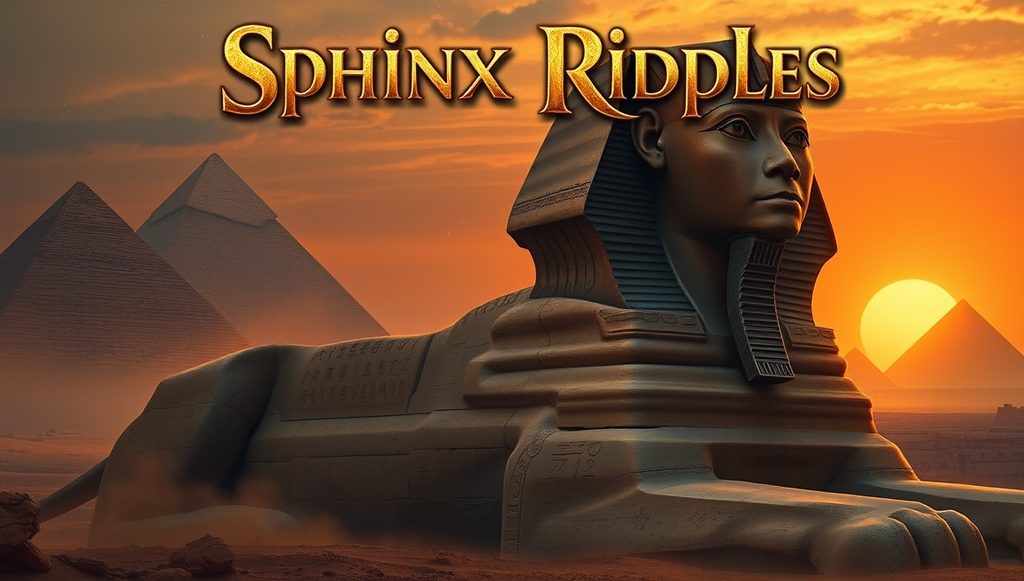
Solving Sphinx riddles is easier when you approach each question patiently. Instead of immediately guessing the first answer that comes to mind, examine the wording and consider whether the clues have a symbolic meaning.
1. Read every word carefully
Small words such as more, less, before, and after can completely change a riddle’s meaning. Look for clues that narrow down the possible answers.
2. Think beyond literal meanings
Some riddles use metaphors. Morning, noon, and evening in the famous Sphinx riddle represent stages of life rather than actual times of day.
3. Test different possibilities
Consider several potential answers and check which one fits every clue. A good solution should explain the whole riddle, not just one part.
4. Understand the context
A mythology-based riddle may refer to ancient beliefs, legendary characters, or symbolic ideas. Knowing the background can make its meaning easier to understand.
🏛️ What Is the Difference Between the Greek Sphinx and the Egyptian Sphinx?
Although both are associated with the Sphinx figure, the Greek and Egyptian traditions have different cultural meanings.
| Feature | Greek Sphinx | Egyptian Sphinx |
|---|---|---|
| Famous association | The riddle of Oedipus | The Great Sphinx of Giza |
| Typical depiction | Often a winged lion with a woman’s head | Lion’s body with a human head |
| Main cultural role | Mythical challenger associated with a deadly riddle | Monumental guardian figure |
| Famous location | Thebes in Greek mythology | Giza Plateau in Egypt |
| Modern symbolism | Mystery, riddles, and intellectual challenges | Ancient civilization, monuments, and royal power |
These are broad distinctions; artistic depictions and religious meanings varied across time and culture.
Understanding the difference adds historical depth to Sphinx riddles and helps readers distinguish the famous Greek legend from the ancient Egyptian monument.
🌟 Why Are Sphinx Riddles Still Popular in 2026?
Sphinx riddles remain appealing because they combine mystery, history, and the satisfaction of solving a difficult question. They can entertain people of different ages without requiring special equipment or complicated instructions.
Here are several reasons people continue to enjoy them:
- Mental stimulation: Riddles encourage logical thinking and creative problem-solving.
- Historical curiosity: The connection to ancient Greece and Egypt makes the puzzles more interesting.
- Social interaction: Friends and families can challenge one another to find the answers.
- Educational value: Teachers can use riddles to encourage discussion, vocabulary development, and reasoning.
- Shareable content: Short questions and surprising answers are easy to use in quizzes, posts, and group chats.
- Multiple difficulty levels: Beginners can start with simple riddles, while experienced puzzle lovers can explore more complex challenges.
Their continued appeal comes from their timeless format rather than any guarantee that a particular riddle is trending. A well-written puzzle can be enjoyable whenever someone is ready to solve it.
💖 What Sphinx Riddles Teach Us About Life
Beyond entertainment, some Sphinx riddles invite readers to think about broader ideas such as wisdom, patience, and the limits of knowledge.
Wisdom matters more than assumptions. A quick answer may seem correct, but carefully considering the clues can reveal a better solution.
Life changes over time. The famous riddle of the four-legged, two-legged, and three-legged creature uses the stages of human life to turn a simple question into a meaningful reflection.
Curiosity opens new possibilities. When a question seems difficult, exploring different interpretations can lead to a surprising discovery.
Patience improves understanding. Taking time to examine the details often makes confusing puzzles easier to solve.
These lessons are interpretations inspired by riddles, not claims that every ancient Sphinx story was intended to teach the same moral.
🧩 FAQs
1. What is the most famous Sphinx riddle?
The most famous Sphinx riddle asks what walks on four legs in the morning, two legs at noon, and three legs in the evening. The answer is a human being, symbolizing infancy, adulthood, and old age.
2. Who solved the riddle of the Sphinx?
In Greek mythology, Oedipus solved the Sphinx’s riddle. His answer was that the creature represented a human being moving through different stages of life.
3. Are Sphinx riddles Greek or Egyptian?
The famous riddle associated with Oedipus belongs to Greek mythology. Ancient Egypt also had sphinx figures, including the Great Sphinx of Giza, but its historical role is different from that of the Greek mythological challenger.
4. Why did the Sphinx ask riddles?
In the Greek myth, the Sphinx challenged people with a riddle and punished those who failed to solve it. The story emphasizes the importance of intelligence and understanding.
5. Are Sphinx riddles good for kids?
Yes. Age-appropriate riddles can help children practice logical thinking, reading comprehension, vocabulary, and problem-solving. Easier puzzles are a good starting point.
6. What makes a Sphinx riddle difficult?
A Sphinx riddle can be difficult because it uses metaphor, ambiguity, symbolic language, or clues that challenge ordinary assumptions. Careful reading is often essential.
7. What is the answer to the four-legged Sphinx riddle?
The answer is a human being. A baby crawls on four limbs, an adult typically walks on two legs, and an older person may use a cane for support.
8. Can I use Sphinx riddles for classroom activities?
Yes. Teachers can use them as warm-up exercises, group challenges, reading activities, or mythology lessons. Asking students to explain their reasoning makes the activity more valuable.
9. What is the difference between a Sphinx riddle and an ordinary riddle?
A Sphinx riddle is associated with the legendary Sphinx or inspired by its mysterious, challenging image. An ordinary riddle can involve any subject and does not need a mythological connection.
10. How can I make my own Sphinx riddle?
Choose a subject, identify an unusual characteristic, and describe it indirectly through clues. Keep the wording clear enough for a fair solution, and make sure the answer fits every important clue.
🎯 Conclusion
Sphinx riddles bring together ancient mythology, clever wordplay, and the excitement of solving a mystery. From the legendary challenge faced by Oedipus to modern brain teasers for adults and children, these puzzles remind us that the most interesting answers are not always the most obvious.
Whether you are exploring Greek legends, learning about the Great Sphinx of Giza, or challenging your friends with tricky questions, the key is to stay curious and think carefully.
Try solving the riddles before looking at their answers, share your favorites with friends, and challenge someone to solve the famous Sphinx riddle. You may discover that a little mystery makes learning much more enjoyable. ✨
